

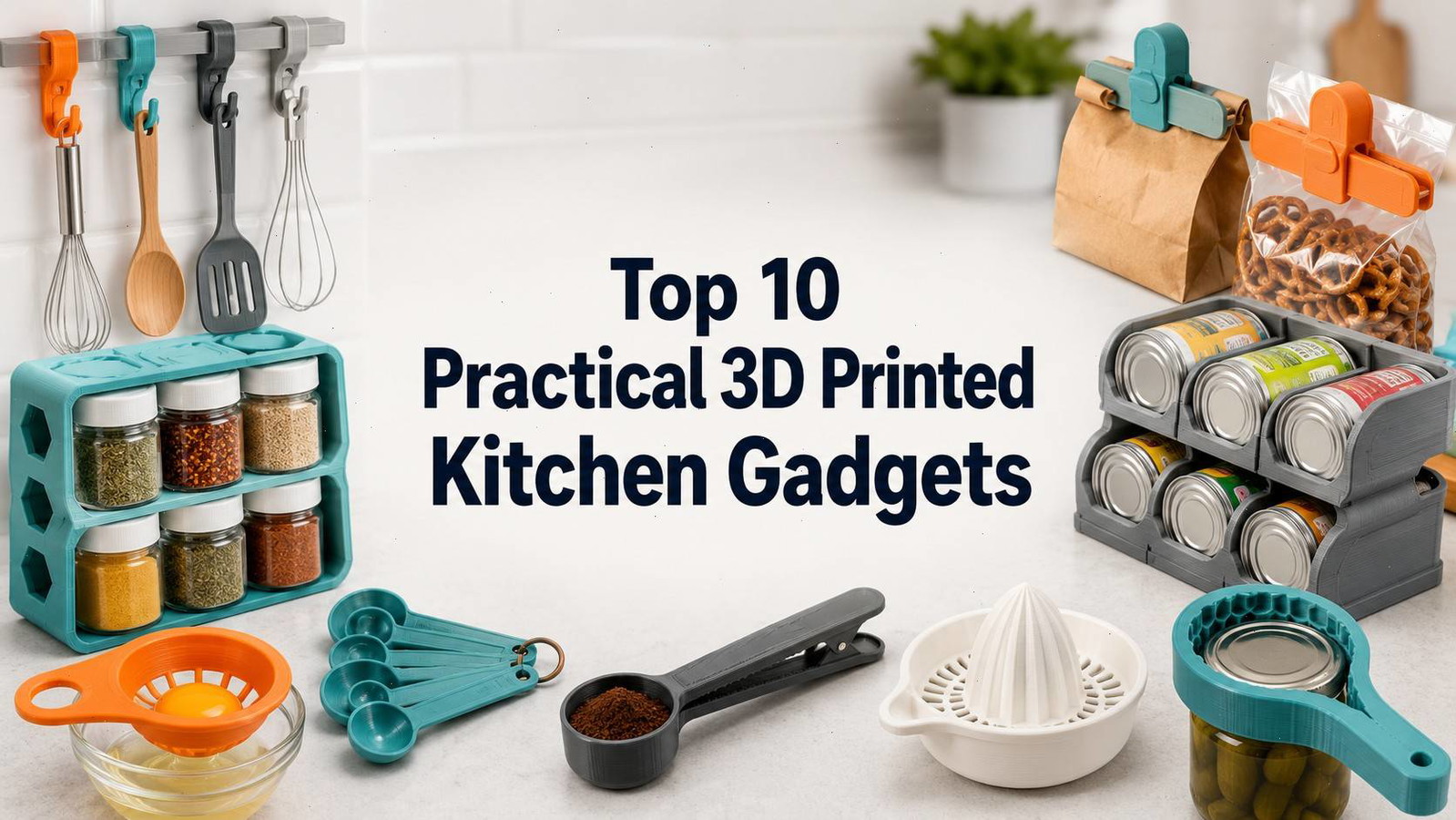
3D printing earns its place in the kitchen when it solves small, irritating problems: loose snack bags, crowded spice shelves, missing scoops, rolling cans, and drawers that never seem quite large enough.
Read More: While these gadgets are certainly practical, you might also be interested in discovering which 11 Most Profitable 3D Printing Models That Actually Sell can turn your crafting hobby into a successful venture.
Kitchen prints are also a good reminder that useful models don’t need to be complicated. Some of the most practical designs are simple parts that print quickly, use very little filament, and can be resized to suit a particular shelf, container, or tool.
Below are ten practical 3D printed kitchen gadgets that make sense beyond the novelty of printing them. Some are mainly organizational, while others help with everyday cooking and food prep.
A Quick Note About 3D Printed Kitchen Tools
Before printing anything that will touch food, it’s worth thinking about material choice, print quality, and cleaning.
Layer lines can trap moisture and food residue, especially in models with narrow grooves or rough internal surfaces. For items such as spice racks, bag clips, hooks, and can organizers, this usually isn’t a concern because the print doesn’t directly contact wet food.

Tools such as measuring spoons, citrus juicers, egg separators, and peelers need more care. A smooth model with simple geometry is much easier to clean than an intricate print with tiny recesses.
Also check the filament manufacturer’s guidance rather than assuming every spool is suitable for food-contact use. Colorants, additives, nozzles, coatings, and printer contamination can all matter.
For many kitchens, the most sensible approach is to use 3D printing heavily for storage and organization, while treating direct food-contact parts more cautiously.
1. Clip-On Bag Sealers
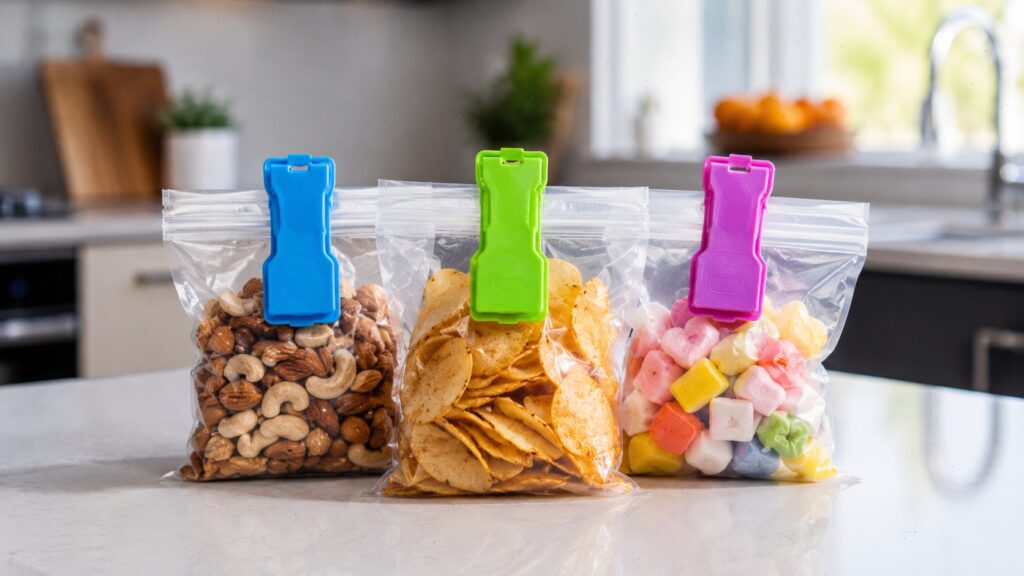
A clip-on bag sealer is one of those small prints that becomes useful almost immediately.
The basic idea is simple: fold the open end of a snack, cereal, coffee, or baking-ingredient bag, then slide or clamp the printed sealer over it. A properly fitted clip keeps the bag closed without relying on rubber bands, clothespins, or awkward knots.
The main advantage of printing these yourself is sizing. Store-bought clips are usually one fixed length, but kitchen bags vary quite a bit. A narrow clip may suit spices or nuts, while a longer version is more practical for cereal, flour, or frozen-food packaging.
Look for a model with slightly rounded edges. Thin, sharp edges can catch flexible packaging and may eventually tear it.
Why It’s Useful
- Helps keep dry food fresher
- Can be printed in several lengths
- Reusable and easy to store
- Uses relatively little filament
- Useful for pantry and freezer organization
This is also a sensible project for leftover filament. Bright colors make the clips easier to find in a crowded drawer, though a simple neutral set tends to look cleaner if you keep them visible on open shelving.
2. Custom Spice Racks
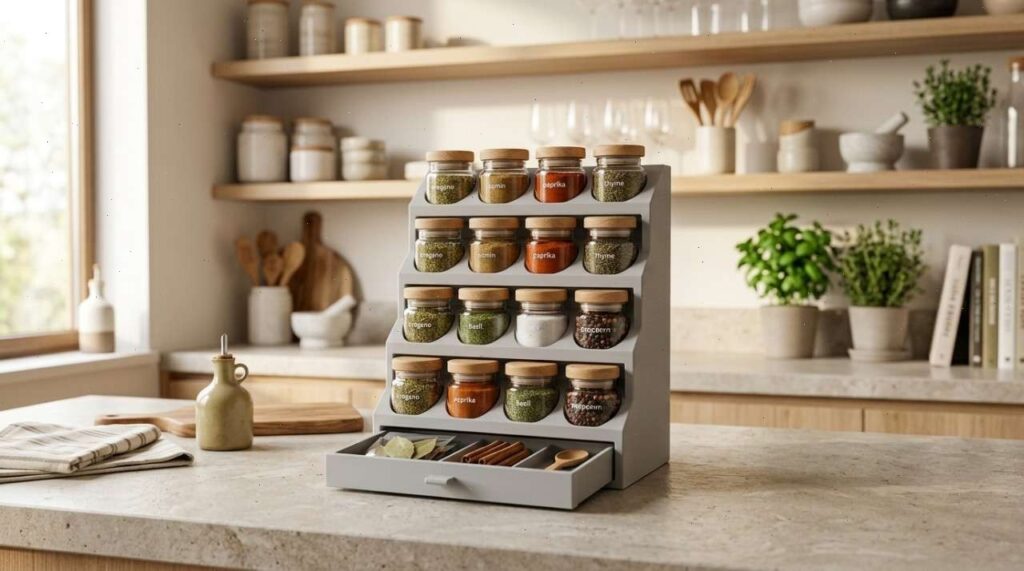
Spice storage is rarely as tidy as it looks in product photos. Jars come in different heights, cabinet shelves are often too deep, and the one spice you need somehow ends up behind everything else.
A 3D printed spice rack lets you design around the space you actually have.
Tiered racks are useful in deeper cabinets because they raise the back row high enough to keep labels visible. Wall-mounted holders work better in narrow kitchens, while drawer inserts can keep jars from sliding whenever the drawer opens.
The important detail here is measurement. A rack can look excellent on screen and still waste space if the jar diameter, shelf height, or cabinet depth is slightly off. Measure a few jars rather than assuming they’re identical.
Modular designs are especially practical. Printing several short sections is often easier than producing one large rack, and the smaller pieces are simpler to replace if your spice collection changes later.
Why It’s Useful
- Makes better use of awkward cabinet space
- Keeps labels visible
- Can be sized for your existing jars
- Reduces clutter on countertops
- Modular sections are easy to expand
A heavily decorative spice rack may look interesting, but plain geometry usually performs better. Straight shelves, open sides, and accessible corners are easier to wipe down and less likely to collect dust.
3. Egg Cracker & Separator
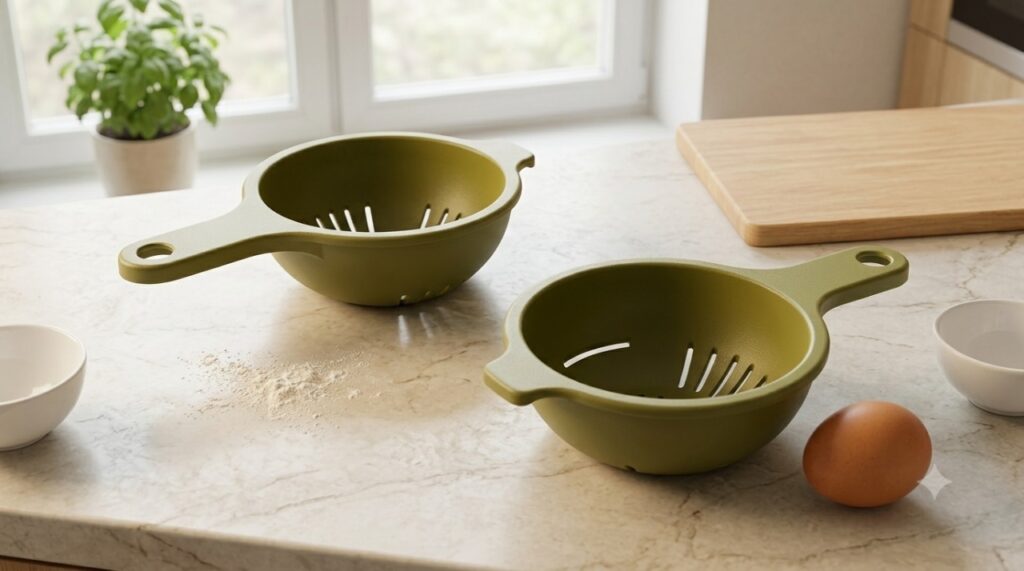
Egg separators are common 3D printing projects because the mechanism is uncomplicated. The egg white passes through an opening or series of slots while the yolk stays supported above the bowl.
Some designs also include a cracking edge, though that feature depends heavily on the model. A cracking lip that is too blunt does very little; one that is too thin may chip or become unpleasant to clean.
For occasional baking, a compact separator that rests securely on the rim of a bowl is usually the most practical style. Handheld designs can work, but they’re easier to tip and often drip across the counter.
Spacing matters too. If the openings are too narrow, the egg white moves slowly. If they’re too wide, a damaged yolk may slip through.
Why It’s Useful
- Separates yolks with less mess
- Helpful for baking and egg-white recipes
- Can sit directly over a bowl
- Easy to resize for different bowl rims
- Simple models print fairly quickly
This is one of the kitchen gadgets that needs careful cleaning. Smooth surfaces and wide openings are preferable to elaborate novelty designs with lots of narrow gaps.
4. Measuring Spoon Set
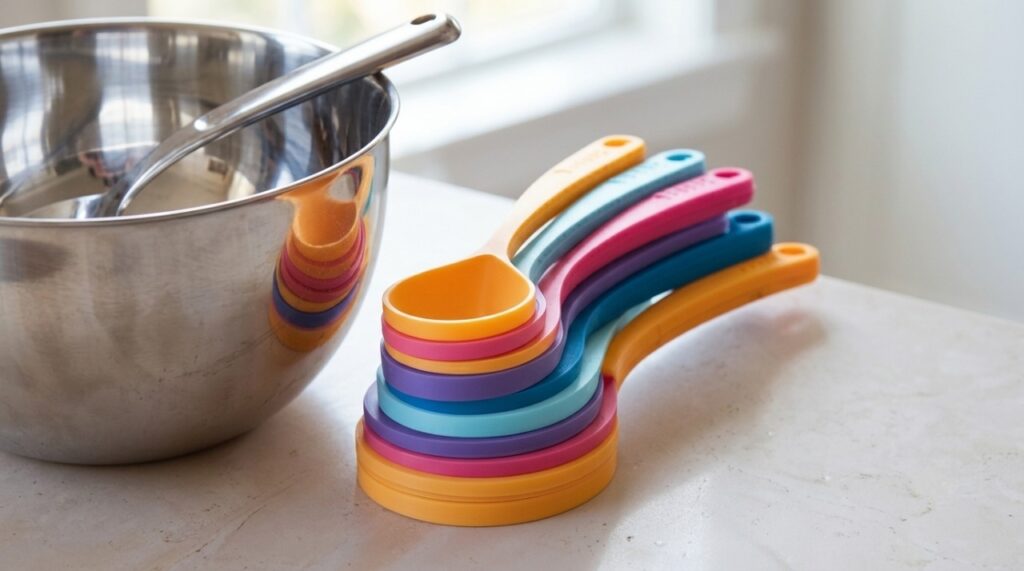
A stackable or nesting measuring spoon set is a satisfying print, particularly when standard store-bought sets never seem to fit neatly in the drawer.
You can print metric measurements, imperial measurements, or a mixed set based on the recipes you use most often. That customization is genuinely useful. A set containing only the sizes you reach for every week takes up less room than a large bundle with several rarely used spoons.
Clear labels are important. Raised lettering is easier to see than shallow engraving, especially after several washes. Still, oversized decorative text can make the handle bulky, so there’s a balance.
Accuracy deserves attention as well. A downloaded model may be labeled as one tablespoon without being dimensionally exact after slicing, extrusion, and printing. For casual cooking, a small difference may not matter. For baking, it can.
Checking the finished volume with water and a kitchen scale is a simple way to see how close the spoon is.
Why It’s Useful
- Can be printed in metric or imperial sizes
- Nesting designs save drawer space
- Missing spoons can be replaced individually
- Labels and handle shapes are customizable
- Useful for dry ingredients and general prep
A wide, shallow bowl is often easier to fill and level than a narrow, deep one. It also cleans more easily.
5. Fruit & Veggie Peeler Handle
A printed peeler handle makes sense when the metal blade is still usable but the original plastic grip has cracked, become uncomfortable, or gone missing.
The best designs focus on ergonomics rather than decoration. A slightly thicker grip with rounded sides gives better control, especially when peeling firm vegetables such as carrots or potatoes.
Blade retention is the critical part. The metal insert should fit firmly without twisting or pulling out during use. A handle that feels secure while sitting on the counter may still loosen once pressure is applied.
Print orientation also matters because the handle experiences repeated force. A model with weak layer direction around the blade slot can split unexpectedly.
Why It’s Useful
- Reuses an existing metal blade
- Can reduce hand strain
- Grip thickness can be customized
- Useful for repairing an otherwise functional tool
- Easier to distinguish from similar utensils when printed in a bright color
This isn’t a project where a decorative, fragile handle makes much sense. Strength, grip, and secure blade placement matter far more than an elaborate shape.
6. Coffee Spoon Clip
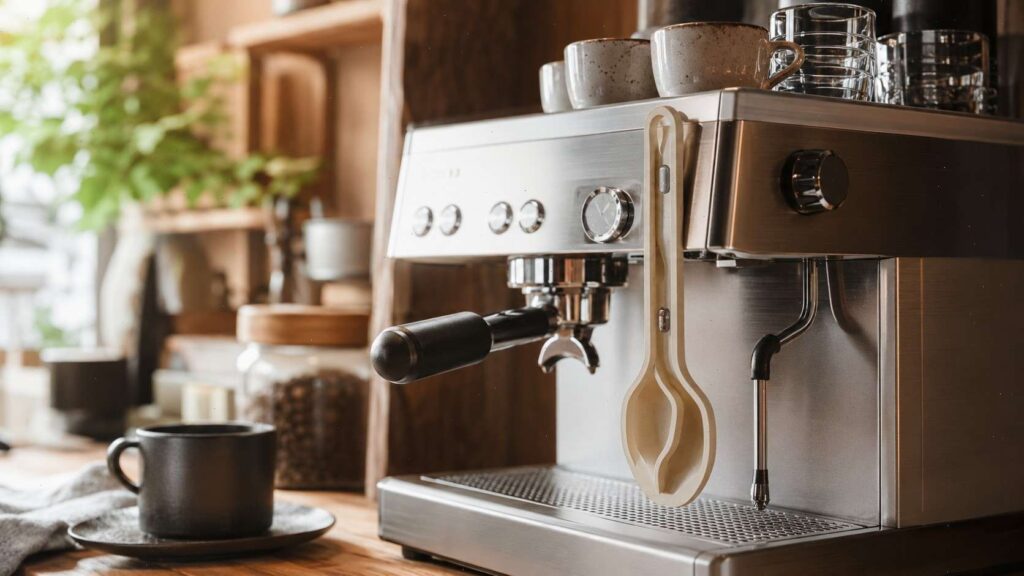
A coffee spoon clip combines two small tools into one: a measuring scoop and a bag closure.
That may sound slightly gimmicky, but it’s surprisingly practical for ground coffee stored in a flexible bag. The scoop stays attached to the package, so it doesn’t disappear into a drawer or get buried underneath other utensils.
The clip section needs enough tension to hold the folded bag closed without cracking. Very thin hinges or sharply bent parts may look elegant in the model preview but tend to be the weak point after repeated use.
The spoon size should also match your brewing method. A large scoop may suit a French press, while a smaller one is more convenient for a single-cup brewer.
Why It’s Useful
- Keeps the scoop attached to the coffee bag
- Helps close the package between uses
- Saves space
- Easy to customize by scoop volume
- Makes a practical small gift for coffee drinkers
A long handle is convenient for deep bags, but too much length adds leverage and can strain the clip. Medium-length designs usually feel more balanced.
7. Stackable Can Organizers
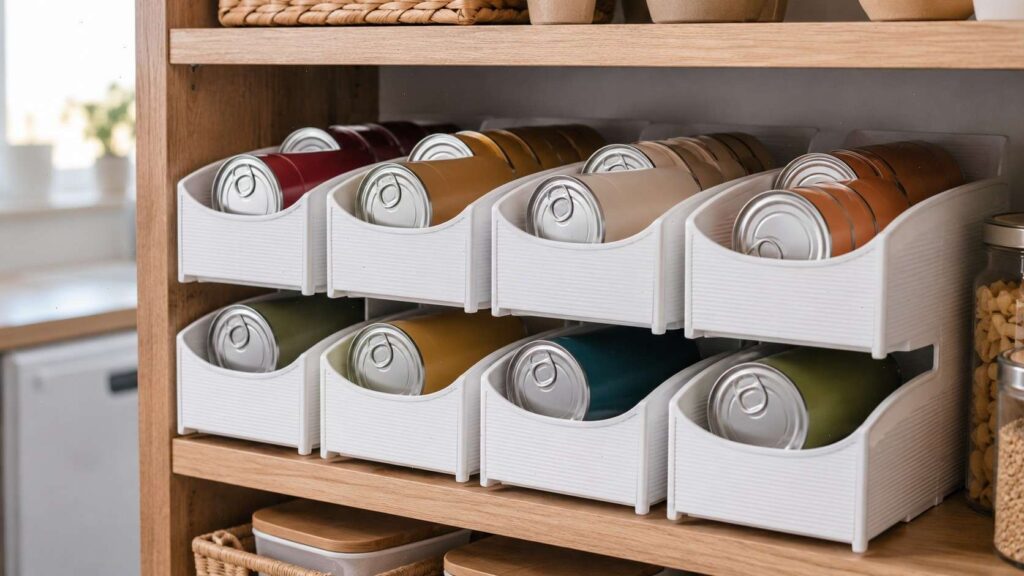
Canned food is awkward to organize because round containers roll, stack poorly, and hide their labels when pushed to the back of a shelf.
A stackable can organizer gives each can a defined position. Some designs hold cans in angled channels so the next one rolls forward when the front can is removed. Others use individual modular cradles that can be arranged according to shelf width.
The second style is often easier to adapt. Pantry shelves rarely match the exact dimensions shown in model photos, and modular pieces let you work around hinges, shelf supports, and mixed can sizes.
Before printing a large set, test one section with the cans you actually buy. Soup cans, tomato cans, pet-food tins, and beverage cans may all have different diameters.
Why It’s Useful
- Prevents cans from rolling
- Makes pantry stock easier to see
- Uses vertical space more efficiently
- Modular designs can be expanded
- Helps keep similar items grouped together
Large organizers can use a surprising amount of filament. Printing one prototype first is sensible, especially if the design has thick walls or long support sections.
8. Utensil Hooks & Holders
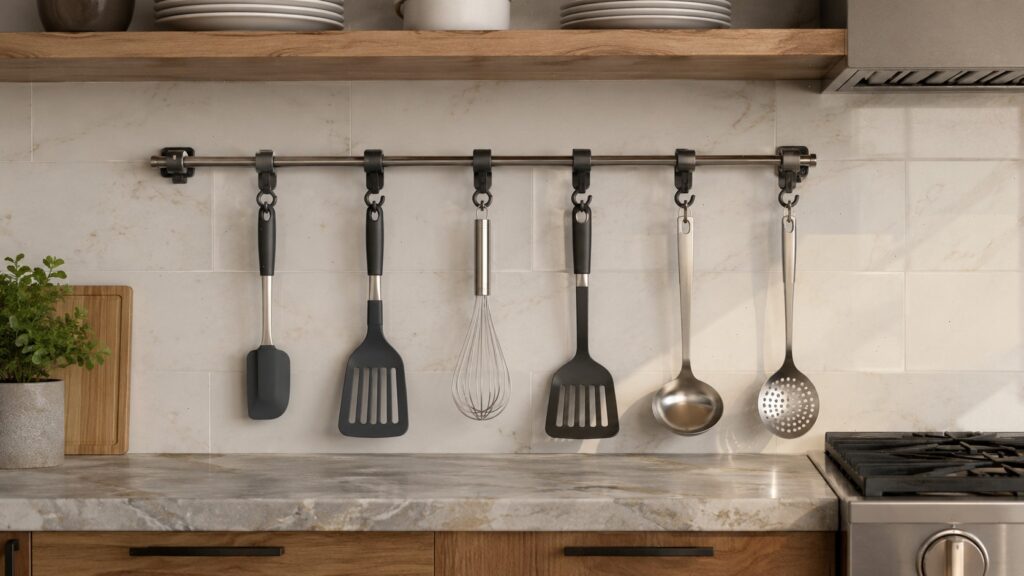
Hooks and holders are among the most useful 3D printed kitchen accessories because they solve storage problems without taking over the countertop.
They can be mounted beneath shelves, inside cabinet doors, along rails, or on the side of an appliance. Small holders are useful for measuring spoons, whisks, peelers, and lightweight spatulas.
Not every kitchen tool should hang from a printed hook, though. Heavy pans, cast-iron utensils, and large cutting boards need stronger mounting hardware.
For lighter tools, the main challenge is making sure the hook fits both the utensil and the surface. Cabinet-door clearance is easy to overlook. A holder may fit beautifully until the door closes and the utensil hits the shelf inside.
Why It’s Useful
- Frees up drawer space
- Keeps frequently used tools visible
- Can be sized for individual utensils
- Useful inside cabinets or beneath shelves
- Small models print quickly
Adhesive-mounted holders are convenient, but heat, steam, and grease can weaken adhesive over time. Mechanical mounting is usually more reliable when the location allows it.
9. Citrus Juicer
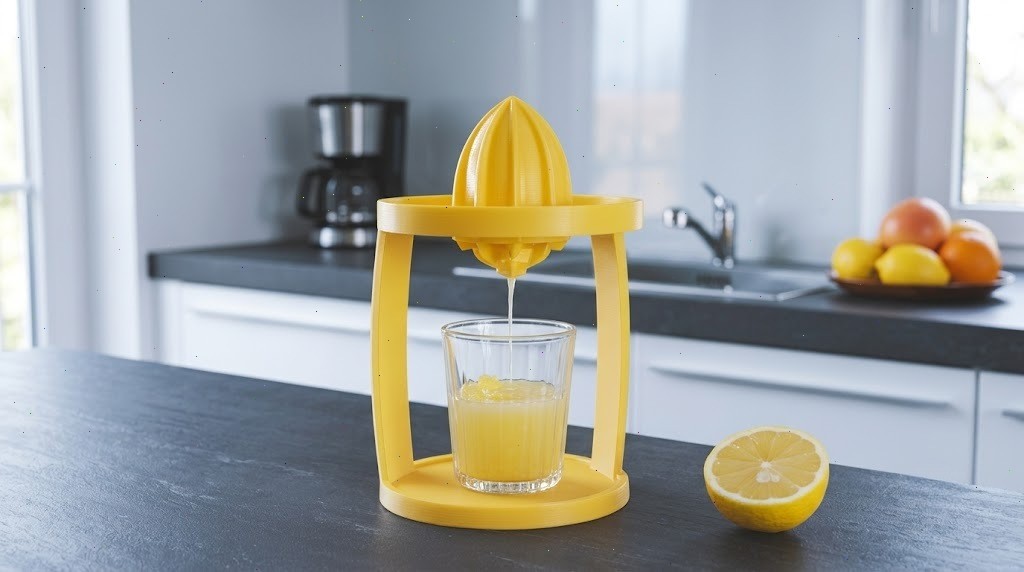
A basic citrus juicer is another common kitchen print. The raised cone breaks down the fruit while slots or holes allow juice to drain into a cup or bowl.
Simple designs tend to be better here. Deep decorative grooves may trap pulp, while narrow drainage holes can clog quickly. A broad cone, smooth basin, and removable strainer are easier to rinse.
The shape also affects how much pressure is required. A cone that’s too short may struggle with larger oranges, while an extremely sharp profile can damage the fruit without extracting juice efficiently.
Some models sit directly over a glass. Others include a built-in container. The removable style is usually easier to store, but a self-contained juicer is less likely to slide during use.
Why It’s Useful
- Useful for lemons, limes, and small oranges
- Helps separate seeds from juice
- Compact models store easily
- Can be printed to fit a favorite cup or jar
- Straightforward geometry makes it easy to customize
Citrus juice is acidic and sticky, so this is another model that should be cleaned promptly. Smooth surfaces and accessible corners make a noticeable difference.
10. Bottle Openers & Jar Grips
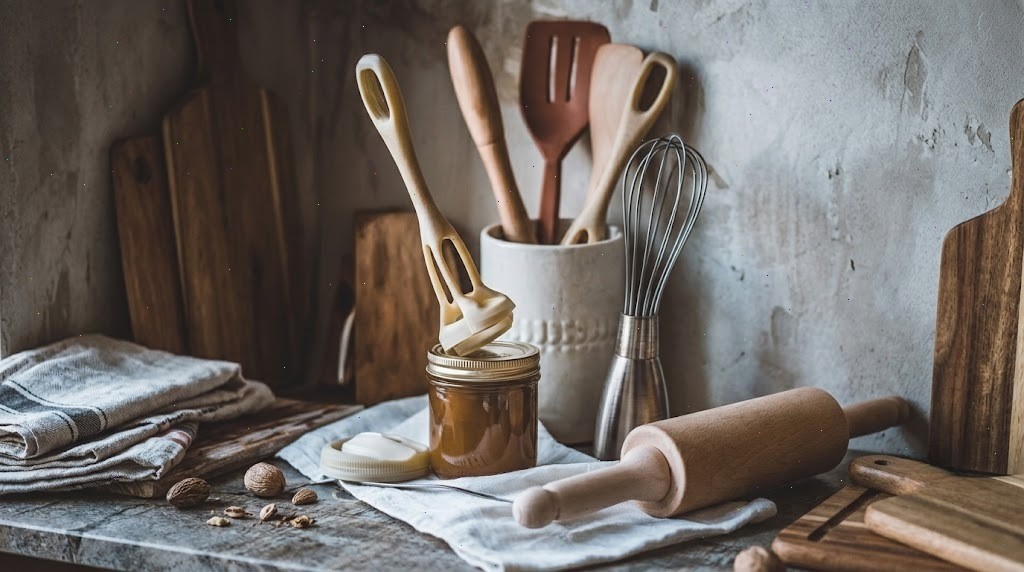
Bottle openers and jar grips are practical prints because they use leverage rather than complicated moving parts.
A printed jar-opening tool can help people who have limited grip strength, sore hands, or difficulty holding smooth lids. Designs usually fit around the lid and extend outward as a handle, allowing more torque with less effort.
Bottle openers often use a metal coin, washer, screw, or insert as the actual contact point. Fully printed edges may wear down quickly, particularly on tight metal caps.
Fit is crucial for jar tools. A single rigid size won’t suit every lid, so adjustable designs or several diameter options are more useful than one oversized opener.
Why It’s Useful
- Reduces strain on the hands
- Adds leverage for tight lids
- Compact enough for a kitchen drawer
- Can be sized for frequently used jars
- Useful for people with reduced grip strength
Avoid making the handle unnecessarily thin. A broader grip spreads pressure across the hand and feels much more comfortable when a lid is stubborn.
If you don’t want to model every kitchen gadget from scratch, Creative Fabrica’s 3D printing library is a handy place to browse ready-made files. You’ll find practical household designs, organizers, accessories, and small projects that are easy to test on a home printer. Just check the dimensions, file format, supports, and license before printing, especially for models that may come into contact with food.
Ready to Print Your Kitchen Gadgets?
The most useful 3D printed kitchen gadgets usually aren’t the most elaborate ones. They’re the small, well-fitted parts that remove a little friction from everyday routines.
Bag clips and coffee scoop clips are quick, low-risk projects. Spice racks, utensil holders, and can organizers take more measuring, but they’re often the most rewarding because they can be designed around a specific kitchen rather than a generic shelf.
Direct food-contact tools need more thought. Smooth geometry, appropriate materials, careful cleaning, and sensible use matter more than an attractive render.
Start with one item you’ll genuinely use. Print a test version, adjust the dimensions, and only then make a complete set. That approach saves filament and usually produces a better result than filling the build plate with ten untested copies.
The real advantage of 3D printing kitchen accessories isn’t simply avoiding store-bought gadgets. It’s being able to make a tool fit your drawer, your shelf, your jars, and the way you actually cook.
Some links in this article may be affiliate links. If you purchase through them, we may earn a small commission at no extra cost to you. Thanks for supporting our work.
Frequently Asked Questions
Are 3D printed kitchen gadgets safe to use with food?
It depends on the filament, printer setup, and design. Layer lines can trap moisture and food residue, so prints that touch food need extra care. For everyday use, organizers, bag clips, hooks, and can holders are usually a safer starting point than spoons, juicers, or egg separators.
What is the best filament for 3D printed kitchen accessories?
PLA is easy to print and fine for dry storage or organization, but it can soften near heat. PETG handles moisture and higher temperatures better, though no filament should be treated as automatically food-safe. Always check the manufacturer’s guidance for the exact material.
Can 3D printed kitchen gadgets go in the dishwasher?
Most shouldn’t. Dishwasher heat can warp PLA and may affect other materials over time. Hand washing with warm water is usually the safer option, especially for thin parts, clips, and tools with small gaps.
Where can I find kitchen gadget STL files?
You can browse ready-made models in u003cstrongu003eu003ca href=u0022https://www.creativefabrica.com/3d-printing/ref/13166536/?campaign=3d-allu0022u003eCreative Fabrica’s 3D printing libraryu003c/au003eu003c/strongu003e. Check the dimensions, supports, file format, and license before printing, since some designs look better in renders than they perform in real use.
Which kitchen gadget is easiest for beginners to print?
Bag clips, coffee scoop clips, and simple utensil hooks are good beginner projects. They’re small, quick to print, and don’t usually need complicated supports. Print one test piece first so you can check the fit before making a full set.
Follow Us