

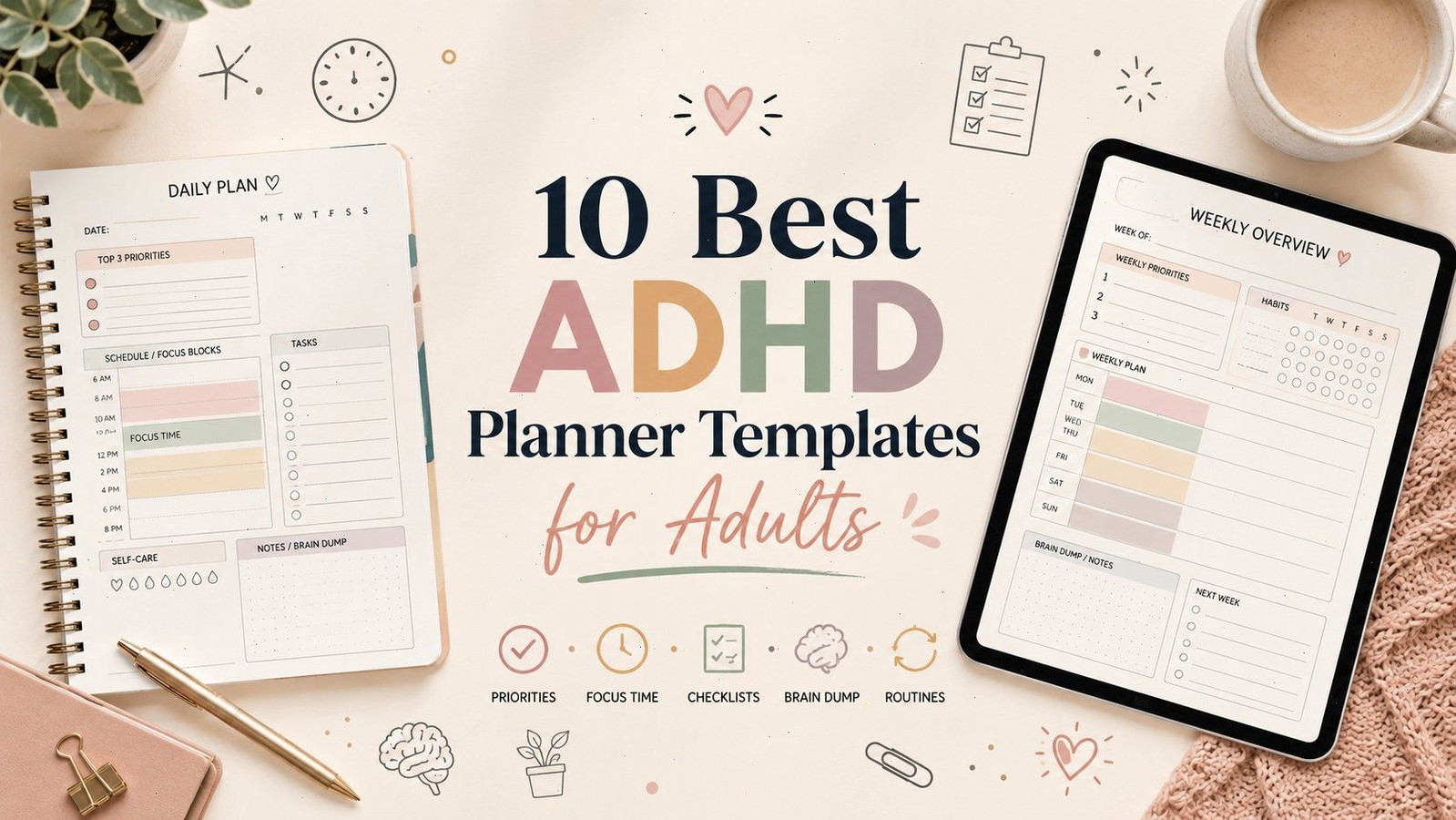
ADHD Planner Templates: 10 Best Picks for Adults
The best ADHD planner templates for adults do more than provide another place to write a long to-do list. A useful layout should make it easier to decide what matters now, capture distracting thoughts, break intimidating tasks into smaller steps, and return to the plan after an interrupted day.
That last point matters. Many conventional planners look organized when empty but become tiring once every section demands daily attention. ADHD-friendly planning usually feels better when the page offers visible priorities, flexible routines, generous writing space, and fewer decisions.

We reviewed printable, digital, and Canva-editable options with different levels of structure. Some are compact daily planners. Others combine work, wellness, appointments, meals, habits, and household planning in one file.
Important: A planner can support organization and time management, but it is not a treatment or diagnostic tool for ADHD.
Quick Picks
- Best customizable bundle: Ultimate ADHD Planner Templates Bundle
- Best hybrid digital and printable option: ADHD Digital and Printable Planner
- Best printable binder option: ADHD Planner Printable
- Best compact focus option: ADHD Focus Planner
- Best simple daily option: Daily Planner for ADHD
How I Picked These
I compared these adult planner templates by page clarity, writing space, task visibility, digital-versus-print flexibility, customization, navigation, specialization, and how easy it is to use only the core pages without turning the planner into another complex routine. These are organizational tools rather than treatment or diagnostic resources.
Best ADHD Planner Templates for Adults
1. Ultimate ADHD Planner Templates Bundle
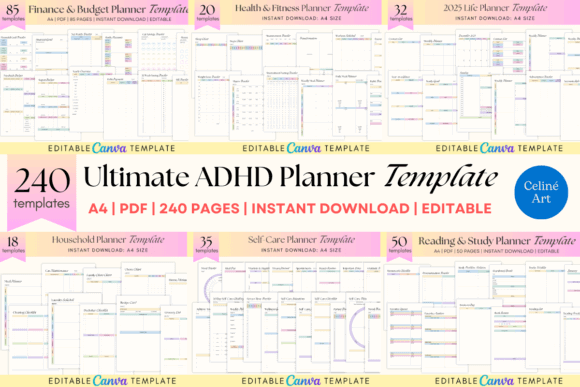
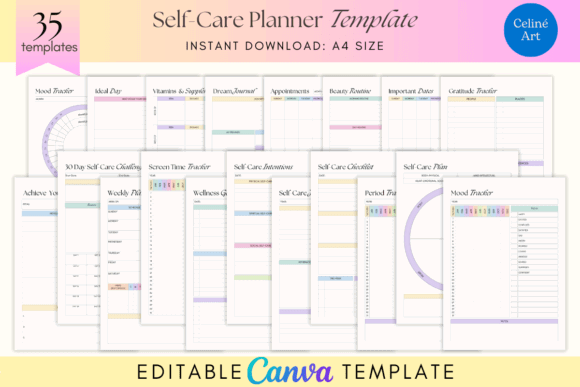
This is the broadest option in the roundup. The bundle contains more than 240 pages and combines everyday organization with wellness and mental-health-oriented worksheets. It is also Canva editable, so colors, labels, and sections can be simplified before printing.
The size is both its strength and its main limitation. You get room to experiment with different planning approaches, but using the entire bundle at once would probably create more friction than clarity. A better approach is to select five or six repeatable pages—perhaps a weekly view, daily priorities, brain dump, routine tracker, and review sheet—and ignore the rest until needed.
Best for: Building a customized all-in-one planning system
Key features: 240-plus pages, editable layouts, wellness sections
2. ADHD Digital and Printable Planner
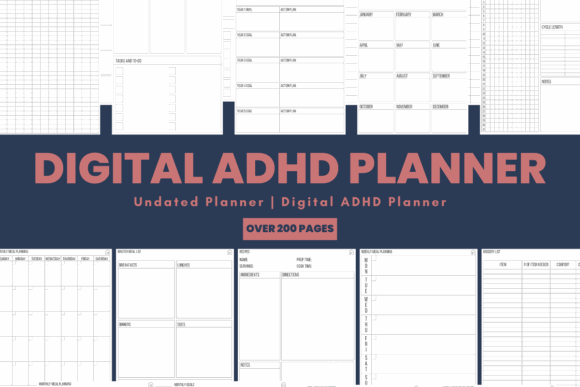
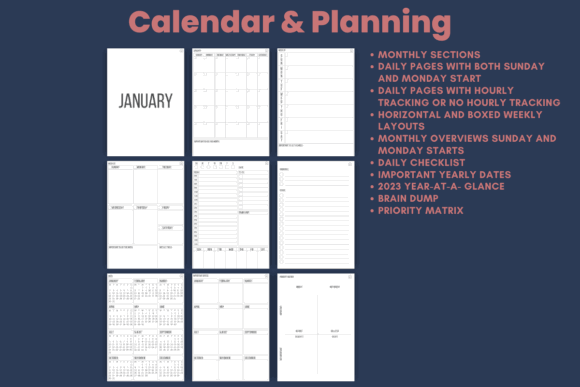
This planner offers more than 200 undated pages and can be used in Goodnotes or another PDF annotation app. It includes monthly, weekly, and daily layouts alongside goals, lists, workouts, sleep, medication, appointments, meals, and health trackers.
Its biggest advantage is consolidation. Instead of scattering appointments, food planning, goals, and health notes between several apps, you can keep them in one file. The downside is navigation: a planner this extensive only feels efficient when its internal menu and hyperlinks become familiar.
It suits tablet users who genuinely enjoy handwriting on screen. Anyone who finds large digital notebooks distracting may prefer a smaller daily template.
Best for: Goodnotes users managing several life areas
Key features: Undated pages, menus, goals, health trackers
3. ADHD Planner Printable
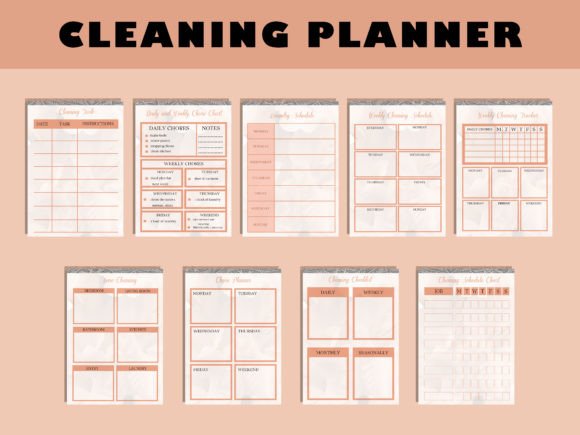
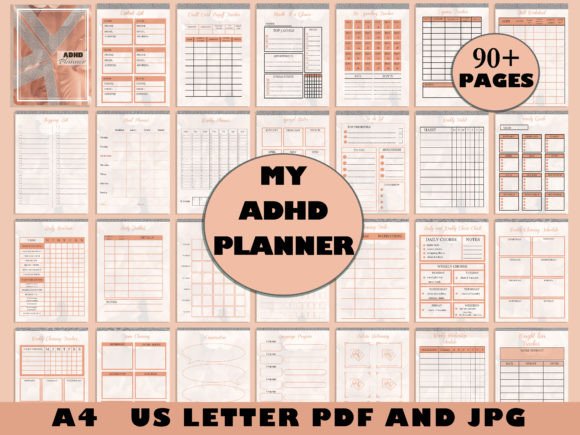
This 90-plus-page printable covers self-care, fitness, calendars, household tasks, budgeting, checklists, schedules, and routine tracking. It comes in A4, A5, and US Letter sizes, with PDF and JPG files included.
The multiple paper sizes make it one of the more flexible printable options. US Letter is convenient for a standard home binder, while A5 is easier to carry. The range of household and budget pages also makes it more practical for adult responsibilities than a planner centered only on school assignments.
The design may still need editing down. Printing every page creates a thick binder, so choose the sections that address current problems rather than building an elaborate system in advance.
Best for: Home organization, budgeting, work, study
Key features: 90-plus pages, multiple printable sizes
4. ADHD Mental Health Planner Bundle Canva
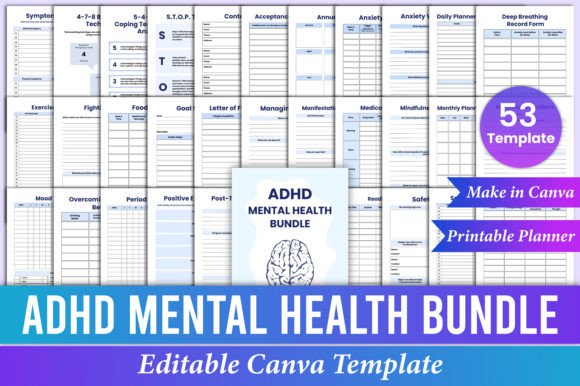
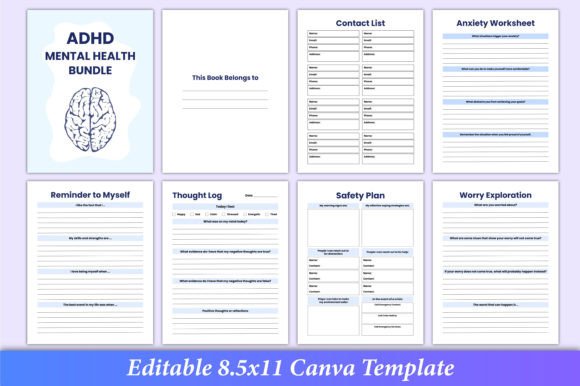
This Canva-editable bundle combines productivity planning with mental health and self-reflection pages. It is a useful direction for people whose planning problems are tied to stress, emotional overload, inconsistent energy, or difficulty recovering after a disrupted routine.
The value here is not simply adding more mood trackers. A good emotional check-in can help explain why a task keeps moving from one day to the next. That makes the planner more reflective than a standard schedule, though it may feel too involved for someone who only wants appointments and three daily priorities.
Customize the terminology before use. Short, familiar prompts are easier to revisit than therapy-style questions spread across a busy page.
Best for: Emotional check-ins, routines, reflective planning
Key features: Canva editable, mental health, planning worksheets
5. Mega ADHD Life Planner Bundle for Adult
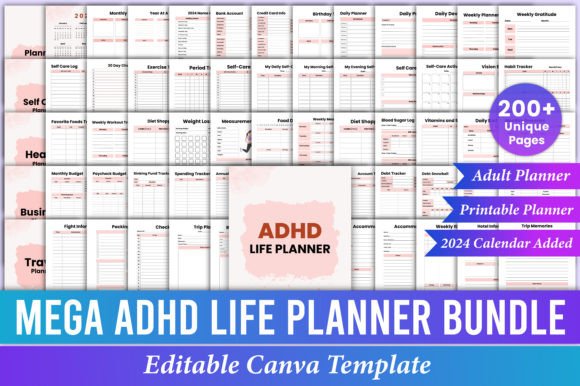
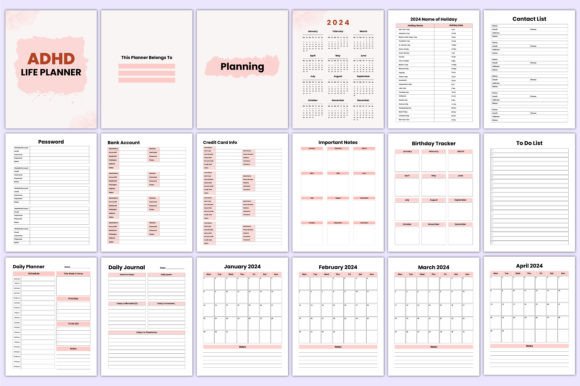
This broad life-planning bundle is designed for adults who want more than a daily schedule. Its KDP-style interior format makes it suitable for printing as a workbook, building a binder, or adapting into a personalized planner.
A life planner is most useful when several recurring areas are slipping at once—work deadlines, home maintenance, routines, wellness, and personal goals. Still, the “mega” format requires restraint. Too many active trackers can turn planning into a second job.
Use the bundle as a page library rather than a fixed sequence. Start with one weekly page and one problem-specific worksheet, then add sections only when they solve a real need.
Best for: Whole-life organization and custom planner building
Key features: Large adult bundle, modular workbook structure
6. ADHD Planner for Adult Canva Template
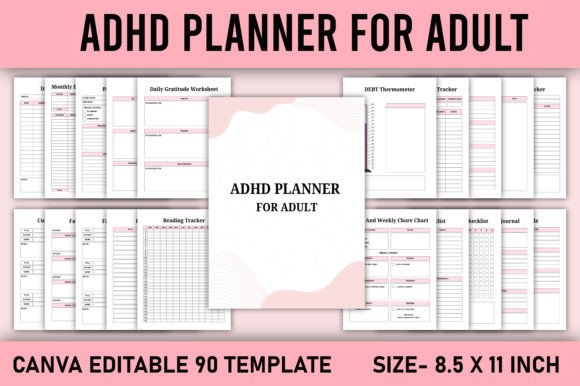
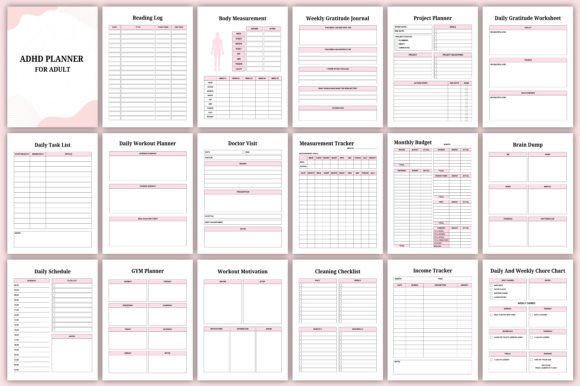
This template is a better fit for users who want to adjust the planner before committing to it. Canva editing lets you remove unused boxes, enlarge writing areas, change visual hierarchy, and rename sections in language that feels natural.
That flexibility can make a surprisingly large difference. A tiny “top priorities” area or overly decorative heading may look fine in a product preview but become irritating in daily use. Editing the page once is often easier than forcing yourself to adapt to a layout that does not match how you think.
This is also a sensible option for coaches, creators, and small-business owners developing a personal planning workbook, provided the final use follows the applicable license.
Best for: Creating a personalized printable ADHD planner
Key features: Editable text, layout, colors, reusable pages
7. Editable Mega ADHD Planner Canva
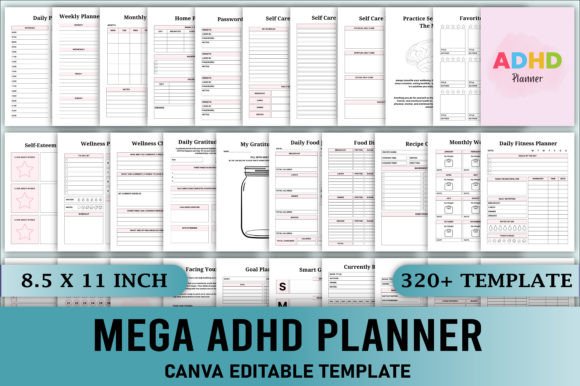
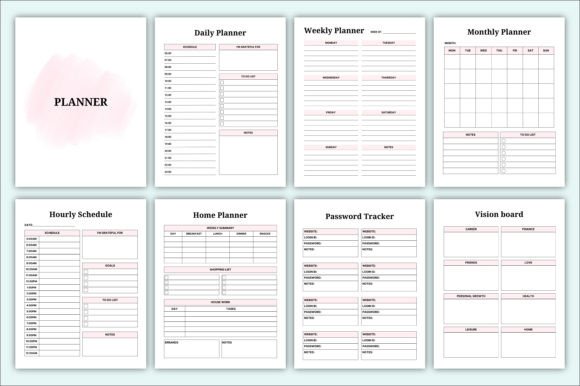
The Editable Mega ADHD Planner combines the breadth of a large planner bundle with Canva customization. This makes it more adaptable than a locked PDF, especially for adults who already know which planning elements help and which ones become background noise.
You can create separate versions for workdays, low-energy days, project planning, or household resets. That is often more useful than trying to make one page handle every possible situation.
The main risk is spending too much time designing the planner instead of using it. Set a short customization limit, export the pages, and test them for a week before making further changes.
Best for: Highly customized routines and planning workflows
Key features: Large page set, editable Canva layouts
8. Digital ADHD Planner for Adult Canva
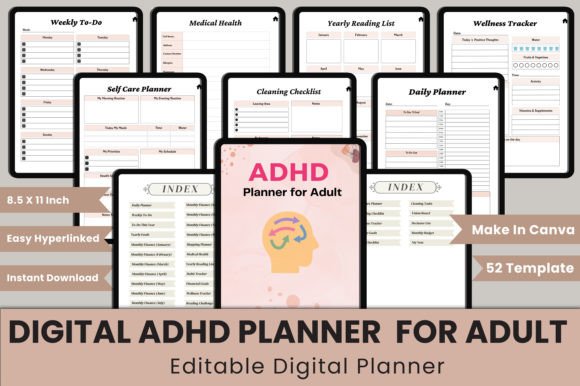
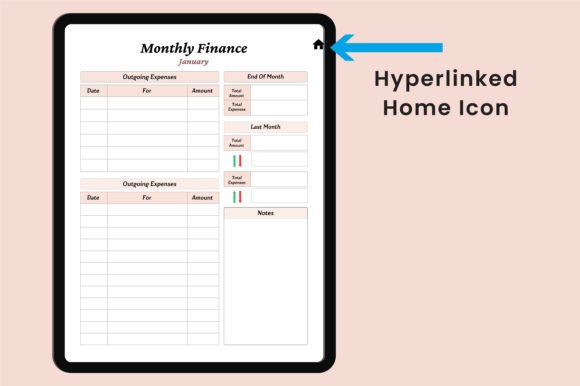
This option is aimed at adults who want a digital ADHD planner but also want control over its appearance and wording. The Canva source can be customized before being exported for tablet use.
Digital planning is especially convenient for repeated pages. You can duplicate a daily layout, move unfinished notes, and keep the planner on the same device as your calendar and reference files. On the other hand, the device also contains notifications, browsers, and other distractions.
This template makes the most sense when you already use a tablet consistently. Buying a digital planner rarely creates a digital planning habit by itself.
Best for: Tablet planning and editable digital workflows
Key features: Adult-focused, customizable, reusable digital layout
9. ADHD Focus Planner
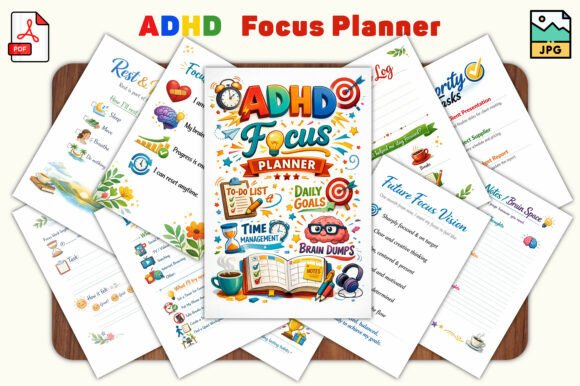
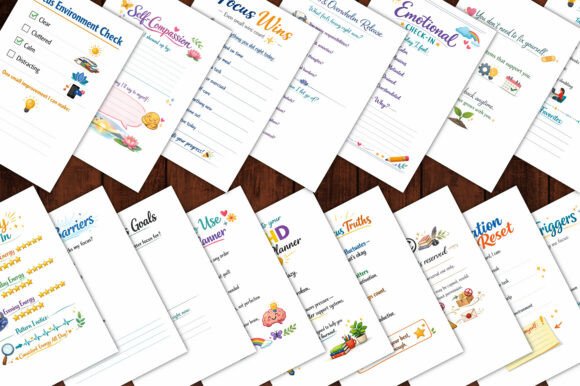
The ADHD Focus Planner is a more compact 30-page option centered on clarity, distractions, focus, and follow-through. Its product structure includes themes such as brain dumping, time management, energy tracking, Pomodoro planning, routines, and self-reflection.
This is one of the stronger choices for someone who feels overwhelmed by giant life planners. Thirty pages provide variety without burying the core planning pages. The focus-oriented structure also makes it useful for project work, freelancing, studying, and tasks that are easy to start but difficult to finish.
It is less suited to anyone looking for detailed meal, finance, home, and appointment management in the same file.
Best for: Focus sessions, task initiation, managing distractions
Key features: 30 pages, brain dumps, focus tracking
10. Daily Planner for ADHD
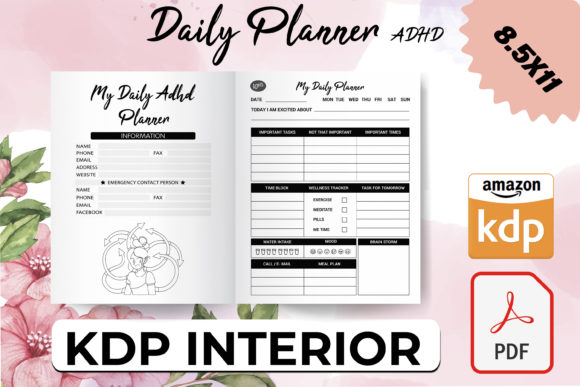
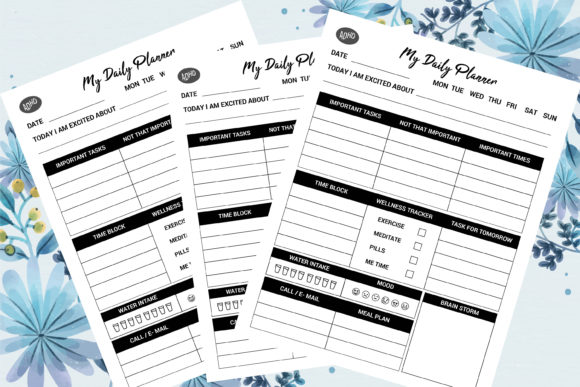
A daily planner is often the most realistic starting point. Instead of introducing an entire productivity system, it gives you one page for the day’s priorities, tasks, schedule, and notes.
This format is useful when weekly plans become too abstract. A single-day view narrows the visual field and makes it easier to distinguish what can actually be completed today from everything that merely feels urgent.
The tradeoff is limited long-range planning. Pair it with a simple monthly calendar for appointments and deadlines rather than forcing every future obligation onto the daily sheet.
Best for: Simple daily priorities and short task lists
Key features: Focused daily structure, low setup burden
Read More: If you're exploring options to boost your organization, you might also find a broader selection of Digital Planner Templates: 15 Best Designs for an Organized Life helpful for managing various aspects of your life.
ADHD Planner Templates Comparison
| Template | Best for | Format | Size | Editable |
|---|---|---|---|---|
| Ultimate ADHD Planner Bundle | Complete custom system | PDF, Canva | 240+ pages | Yes |
| ADHD Digital and Printable Planner | Goodnotes users | Digital PDF | 200+ pages | Limited |
| ADHD Planner Printable | Home and work planning | PDF, JPG | 90+ pages | No |
| Mental Health Planner Bundle | Emotional check-ins | Canva, PDF | Large bundle | Yes |
| ADHD Focus Planner | Focus and distractions | 30 pages | Limited | |
| Daily Planner for ADHD | Simple daily planning | Printable | Compact | No |
Common Mistakes When Using ADHD Planner Templates
An ADHD planner should reduce decisions, not create another complicated routine to maintain. One common mistake is activating every page in a large bundle at once. Daily schedules, meal logs, habit trackers, mood pages, finance sheets, and project planners may all look useful, but maintaining them together can quickly become overwhelming.
Start with the pages connected to your most immediate problem. If appointments are being forgotten, use a monthly calendar and daily schedule. If tasks feel too large to begin, add a project breakdown page. If ideas interrupt focused work, keep a brain-dump page beside the daily planner.
Another mistake is repeatedly redesigning the system. Editable ADHD planner templates are helpful, but customization can become a form of procrastination. Make only the changes required for readability, then test the planner for at least one week before editing it again.
Avoid copying every unfinished task automatically. Review each item and decide whether it should be completed, rescheduled, delegated, or removed. This keeps the planner from becoming a permanent list of overdue obligations.
Finally, do not treat missed days as failure. Undated ADHD planner templates for adults are especially useful because they allow you to restart immediately. The goal is not to maintain a perfect planning streak. The goal is to create a system that remains easy to return to after interruptions.
How to Choose an ADHD Planner Template
Printable or Digital?
A printable ADHD planner provides a visible physical object and removes app notifications from the planning process. It also makes crossing out tasks satisfying and immediate. The drawback is that pages cannot be searched, easily rearranged, or automatically duplicated.
Digital planners are easier to carry and reuse. They work especially well for people already comfortable with Goodnotes or another annotation app. However, opening a tablet can introduce extra steps—and extra distractions—before you reach the planner.
Choose the format you already interact with regularly. Convenience matters more than novelty.
Simple Layout or Complete Life Planner?
Pick a simple planner when your main problems are choosing daily priorities, remembering appointments, or starting tasks. A daily focus page, brain dump, and short weekly review may be enough.
Choose a complete life planner when you genuinely need several connected areas in one place, such as:
- Work and personal appointments
- Household routines
- Meal planning
- Medication or wellness logs
- Budgeting
- Project planning
- Habit and sleep tracking
Do not assume every included page must be used. A planner is a toolkit, not an assignment.
Dated or Undated?
Undated ADHD planners are usually more forgiving. Missing several days does not leave a visible trail of blank pages, and you can restart whenever your routine changes.
Dated planners reduce setup and provide a stronger calendar structure. They can be helpful when appointments and deadlines are the main priority, but they may feel wasteful when used inconsistently.
Look for Low-Friction Page Design
Before choosing a template, inspect the actual daily and weekly pages rather than judging the cover. Check whether:
- Priority boxes are large enough to write in
- The schedule uses a time range you need
- Labels are easy to understand immediately
- Decorative elements compete with task information
- There is space for unexpected notes
- Repeated trackers are genuinely relevant
A visually busy page can create unnecessary decisions. Good visual hierarchy should make the next action obvious.
Which ADHD Planner Template Should an Adult Choose?
The best ADHD planner template for adults is rarely the one with the most pages. It is the one that reduces the number of decisions between remembering a task and beginning it.
For a comprehensive digital setup, the ADHD Digital and Printable Planner offers extensive navigation and life-management sections. The ADHD Planner Printable is a practical binder option with several confirmed paper sizes. For a lighter system, the ADHD Focus Planner or Daily Planner for ADHD should be easier to start and maintain.
Creative Fabrica has a broad collection of ADHD planner designs, including editable Canva templates, printable workbooks, and digital planners. Its adult ADHD category currently includes focused planners as well as larger life-planning bundles.
The smartest approach is to download a template, select only the pages that address current friction, and test the smaller system before expanding it.
Some links in this article may be affiliate links. If you purchase through them, we may earn a small commission at no extra cost to you. Thanks for supporting our work.
FAQ
1. What should an ADHD planner include?
A useful ADHD planner should include daily priorities, a short task list, appointments, a brain-dump area, and space to break larger tasks into smaller actions. Optional sections may cover routines, medication, energy, sleep, meals, or finances.
2. Are digital planners good for adults with ADHD?
Digital planners can be helpful when the user already works comfortably on a tablet. Reusable pages, hyperlinks, search, and easy duplication are useful, but notifications and the extra steps required to open the planner may become distractions.
3. Is a daily or weekly planner better for ADHD?
A daily planner is often easier when long task lists feel overwhelming. Weekly pages are better for seeing deadlines and balancing commitments. Many adults benefit from using a simple weekly overview alongside a more detailed daily page.
4. Do ADHD planners actually work?
Planners can support external organization, scheduling, reminders, and task breakdown, but results depend on the layout and how consistently it remains accessible. ADHD-focused organizations describe planners as practical time-management tools, not substitutes for professional care.
Follow Us