

ℹ️ Affiliate Disclosure: This article may contain affiliate links. We may earn a commission at no extra cost to you. Thanks for your support! ❤️
AI Tools for Creating 3D Printable Models: 10 Powerful Platforms for Makers
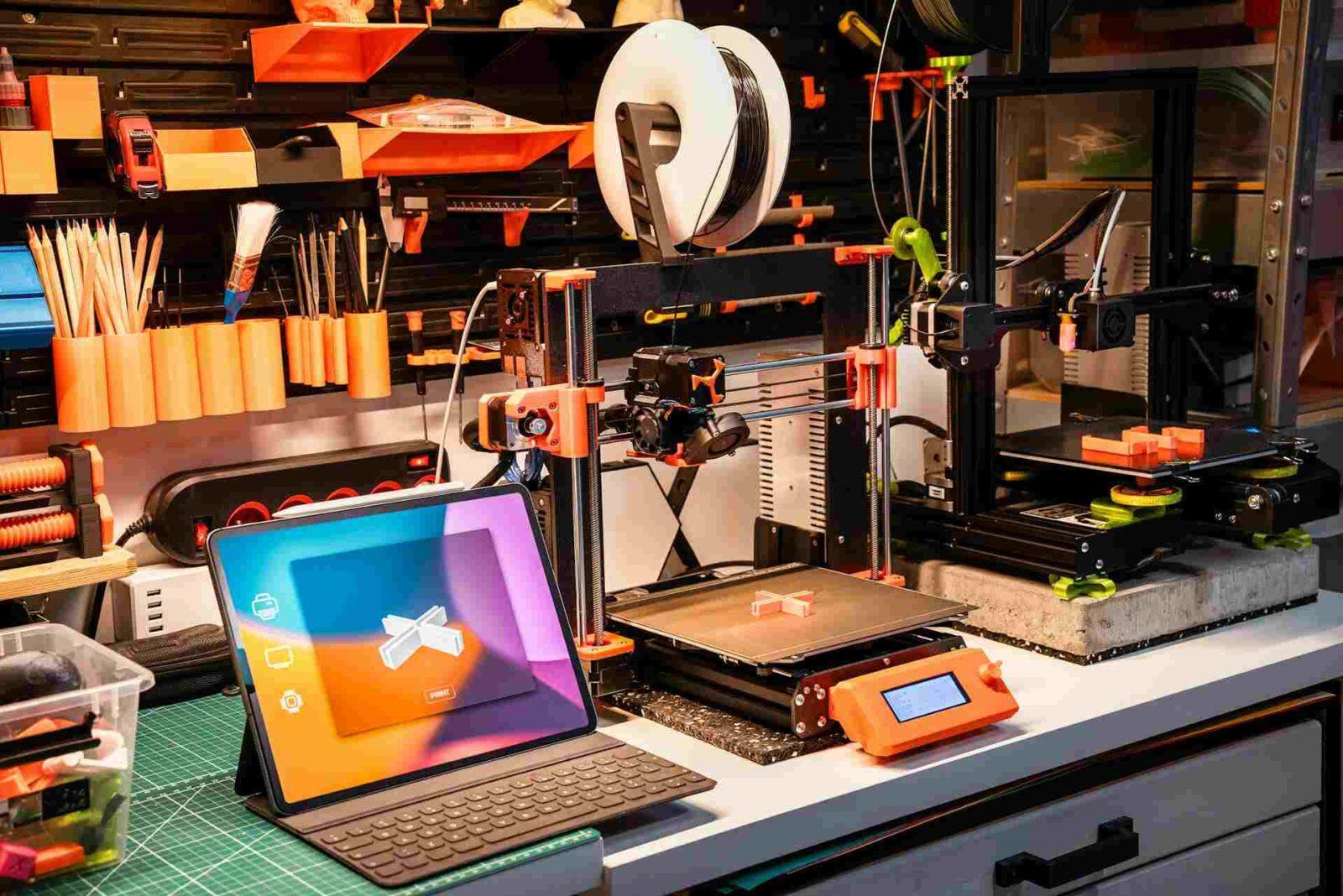
Artificial intelligence is changing how makers, designers, and small businesses create products for 3D printing.
Just a few years ago, creating a printable model required learning complex CAD software such as Blender, Fusion 360, or SolidWorks. Today, AI can transform a simple text prompt into a detailed 3D object in minutes.
Read more: Just as AI empowers makers to design complex 3D models, it also offers incredible solutions for visually presenting those creations, helping you craft stunning visuals as explored in How To Create Professional Product Images With AI.
Whether you're designing products for Etsy, prototyping inventions, or creating custom miniatures, modern AI tools can dramatically speed up the entire workflow.
In this guide, we'll look at the best AI tools for creating 3D printable models, including both beginner-friendly generators and professional-grade platforms.
1. Creative Fabrica 3D Print Generator

One of the most beginner-friendly AI tools for 3D printing is the Creative Fabrica 3D Print Generator.
Instead of creating artistic 3D assets designed for games, this platform focuses specifically on generating models intended for physical printing.
Users simply enter a text description such as:
“Cute articulated dragon with detailed scales” or “Modern geometric planter for succulents.”
The AI then generates printable models that can be exported and prepared for slicing.
Why It Stands Out
- Designed specifically for makers and creators.
- Beginner-friendly interface.
- Fast text-to-3D workflow.
- Ideal for Etsy sellers and print-on-demand businesses.
- Commercial-friendly ecosystem.
If you plan to sell printed products, this tool significantly reduces the time required to move from idea to finished product.
Many creators now use the following workflow:
Idea → AI Generation → STL Export → Slicing → Printing → Selling
The Creative Fabrica ecosystem also includes fonts, graphics, and design resources that can complement your products and branding. The platform offers dedicated AI tools including a 3D Print Generator, 3D Model Generator, 3D Sculpt, and World Creator for designing printable assets and editing models.
2. Meshy AI
Meshy has quickly become one of the most popular AI 3D modeling tools available.
It allows users to generate 3D models from either text prompts or reference images.
Features include:
- Text-to-3D generation.
- Image-to-3D conversion.
- Automatic texturing.
- OBJ and FBX export.
- Mesh editing.
Many makers use Meshy as an ideation tool before refining models for printing.
Best for: Rapid concept generation.
3. Tripo AI
Tripo AI focuses on speed.
The platform can generate surprisingly detailed 3D models in just seconds.
Advantages include:
- Extremely fast generation.
- Text and image inputs.
- High-quality meshes.
- API access for developers.
Although some models may require cleanup, Tripo is excellent for quickly producing AI generated 3D models.
Best for: Fast prototyping.
4. Sloyd AI
Sloyd combines procedural modeling with AI assistance.
Unlike fully generative tools, Sloyd allows users to customize dimensions and shapes while maintaining printable geometry.
Users can modify:
- Width.
- Height.
- Thickness.
- Curvature.
- Structural details.
This makes Sloyd particularly useful for functional objects.
Best for: Parametric printable models.
5. Autodesk Fusion With AI Features
Professional designers increasingly rely on AI-powered capabilities inside Autodesk Fusion.
Features include:
- Generative design.
- Topology optimization.
- AI-assisted workflows.
- Manufacturing simulations.
Fusion remains one of the strongest options for serious product development.
Best for: Engineering and production.
6. Blender With AI Add-ons
Blender itself isn't an AI platform, but numerous AI extensions now add text-to-3D functionality.
Popular add-ons help users:
- Generate meshes.
- Create textures.
- Automate sculpting.
- Accelerate modeling.
Blender offers unlimited creative freedom, although beginners may face a steep learning curve.
Best for: Advanced users.
7. Kaedim
Kaedim specializes in converting 2D images into detailed 3D models.
Artists often use it to transform sketches into editable meshes.
Features include:
- Image-to-3D conversion.
- Manual refinement options.
- Production-quality topology.
While originally designed for gaming assets, many models can be adapted for printing.
Best for: Turning concept art into physical products.
8. Masterpiece X
Masterpiece X focuses on accessible AI-assisted 3D creation.
The platform enables users to:
- Generate models from text.
- Sculpt in VR.
- Edit existing assets.
- Export printable files.
Its intuitive interface makes it attractive for beginners.
Best for: Creators new to 3D design.
9. Luma AI
Luma AI uses photogrammetry and neural rendering to convert real-world objects into 3D assets.
Creators can scan:
- Statues.
- Handmade products.
- Toys.
- Decorative objects.
This technology is especially useful for preserving physical objects or creating replicas.
Best for: Real-world object digitization.
10. Shap-E By OpenAI
Shap-E is an open-source research project capable of generating 3D objects from text descriptions.
Although more technical than commercial platforms, it demonstrates the future potential of text to 3D AI generators.
Developers and researchers often use Shap-E to experiment with custom workflows.
Best for: Experimental AI research.
Read more: As AI tools provide powerful platforms for creation, it's insightful to explore how AI performs in other design areas, especially when considering AI Generated Logos: 9 Surprising Reasons They Look Generic.
Final Thoughts
The quality of AI tools for creating 3D printable models continues to improve rapidly.
For beginners, Creative Fabrica's 3D Print Generator offers one of the simplest ways to transform ideas into printable products. More advanced users may prefer Meshy, Blender, or Fusion for greater control.
As AI technology evolves, the gap between idea and finished 3D print will continue to shrink, opening exciting opportunities for makers, Etsy sellers, and small businesses alike.
FAQ
What is the best AI tool for creating 3D printable models?
Creative Fabrica 3D Print Generator, Meshy, and Tripo AI are among the most popular options for beginners and creators.
Can AI generate STL files?
Yes. Several AI STL generators allow users to export models in STL format for 3D printing.
Are AI-generated 3D models commercially usable?
It depends on the platform's license terms. Always review commercial usage rights before selling printed products.
Can beginners use AI for 3D printing?
Absolutely. Many modern text-to-3D AI generators require no previous 3D modeling experience.
Follow Us